
Pakistan’s Terror Factories and Infrastructure Mayhem
At Home and Beyond Borders
Proxy Warfare
Groups (SATP)
Since 2000
in 2025 Alone
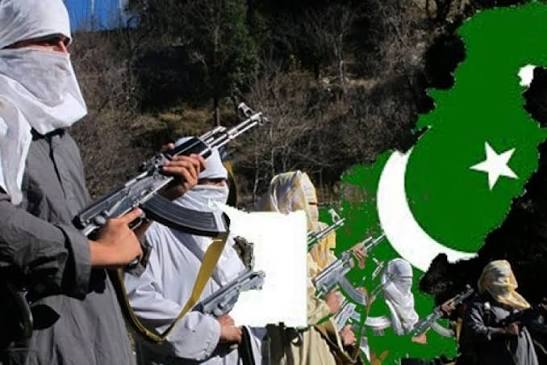
The strategic community that emerged in Pakistan following Partition viewed itself as a materially weaker state facing an existential adversary in India. Conventional military asymmetry encouraged the exploration of sub-conventional and irregular warfare as cost-effective alternatives. Over the years, militant groups came to be seen not merely as tactical assets but as instruments of statecraft capable of exerting pressure externally while shaping internal political dynamics. Soon they were embedded in Pakistan’s regional strategy, particularly in Kashmir and Afghanistan, and became influential players in the domestic arena.

Get Your Copy of Snow Leopards of Gurez: The Prisoner and the Spy Who Exposed Pakistan’s Kargil Plot
The logic was straightforward: irregular forces required comparatively minimal financial investment relative to conventional military modernization while offering strategic leverage. They provided plausible deniability in international forums, complicating attribution and shielding the state from direct accountability. Domestically, such networks could also serve to manage dissent, influence political actors, and enforce ideological conformity.
“Proxies cultivated for strategic leverage may reorient against their patron when political alignments shift.”
Religion became the unifying framework. Surrounded by Muslim-majority states and seeking ideological consolidation, the Pakistani establishment drew upon Islam as the legitimizing force behind mobilization. Militant networks were framed not as irregular combatants but as defenders of faith, transforming geopolitics into religious obligation. Over decades, this architecture expanded beyond external projection to encompass internal security dynamics.
You May Also Like to Watch
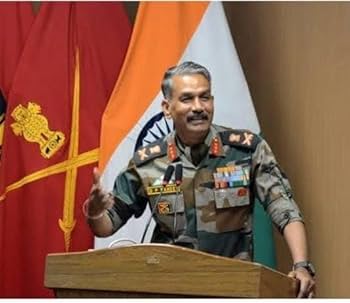
Lt Gen Devendra Pratap Pandey (Retd) shares his perspective on a related theme of regional security and militancy.
Copyright/Disclaimer:
This article was originally written and published by Lt Gen Devendra Pratap Pandey, PVSM, UYSM, AVSM, VSM (Retd) in Medals & Ribbons magazine, Commentary section. The content, analysis and imagery herein solely belong to the original publication, Medals & Ribbons. It is shared here for informational and educational purposes only, and no ownership over the original publication is claimed.