
Alliance with the Giants: Flying Over Ladakh
Lt Gen D.P. Pandey (Retd.) Airspace over Ladakh | Enroute to Leh
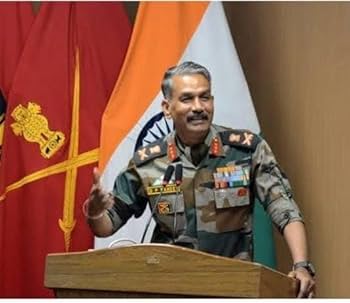
Lt Gen Devendra Pratap Pandey (Retd)
Former Corps Commander, Chinar Corps | DG Territorial Army | Director of Military Intelligence | Commandant, Army War College
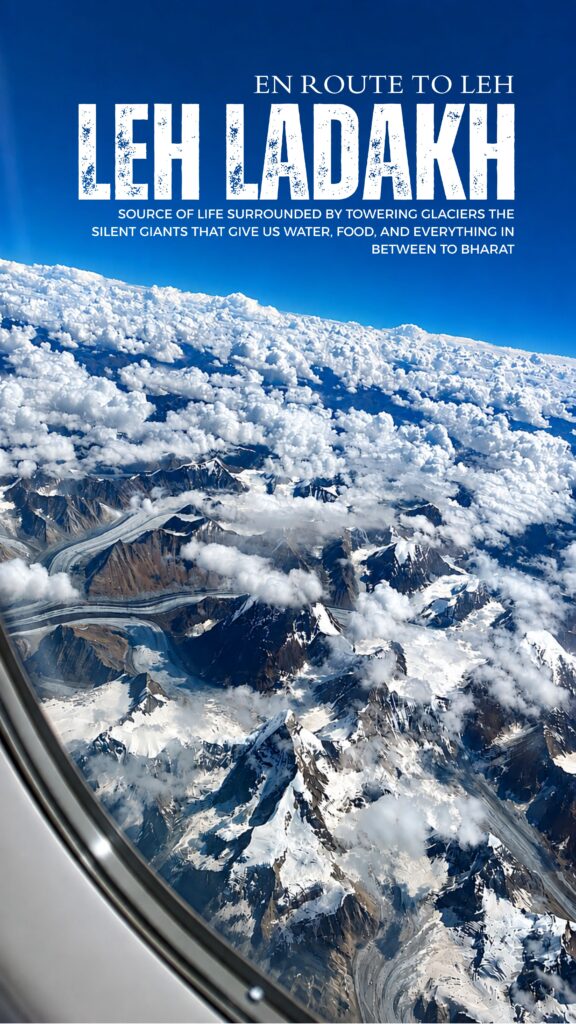
Flying over Ladakh once again, I found myself looking down at the mountains with a familiarity that is difficult to explain to someone who has never served among them. The Himalayas have a way of staying with you.
Years may pass. You may move to different places, take on different responsibilities and eventually retire from uniform. Yet the sight of those ridgelines, the barren valleys, the snow-covered heights and the vast expanse of Ladakh can bring back memories with remarkable clarity. For a soldier who has spent years in these mountains, they are not simply geographical features. They become a part of one’s life.
As I looked down from the aircraft, I was reminded of the respect these mountains command. For a visitor, the Himalayas can appear severe magnificent, certainly, but harsh. The thin air, sub-zero temperatures, fierce winds and unpredictable weather can make even routine activities physically demanding. For a soldier, however, the perspective is different. The weather may be unforgiving, the altitude may test the body, and the terrain may make every movement difficult, but none of this changes the responsibility.
When you are deployed on the frontier, the question is never whether the conditions are comfortable. The question is whether the nation requires you to be there.
If the answer is yes, you are there.
That is perhaps one of the simplest truths of soldiering. I have often felt that the Himalayas teach a soldier this lesson better than any classroom can. They teach humility, patience and preparation. You cannot command the mountain. You cannot negotiate with the weather. You cannot wish away the altitude. You learn to understand the terrain, respect its dangers and adapt yourself to its demands.
In that sense, a soldier does not conquer the Himalayas. He learns to live with them.
And over time, something remarkable happens. What begins as a difficult operational environment becomes familiar. A ridge acquires a name. A valley acquires a memory. A particular pass becomes associated with a particular posting, a particular group of soldiers or a particular period of one’s life. The mountain becomes a companion. I have seen young soldiers serve in conditions that would appear extraordinary to most people. At extreme altitudes, where the cold penetrates every layer and the lack of oxygen makes even simple physical activity exhausting, they continue with their duties. They maintain their posts, carry out their tasks, look after their comrades and remain alert.
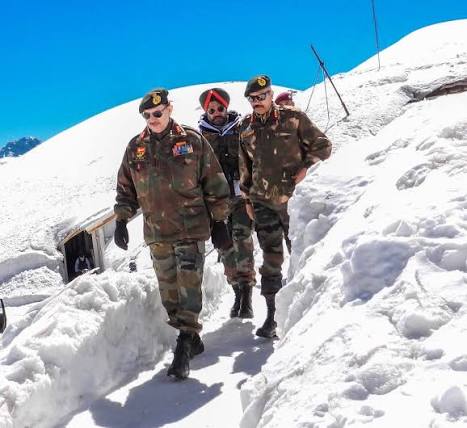
There is very little glamour in this kind of soldiering. Much of it is routine. Much of it is uncomfortable. Much of it is unseen. But that is precisely what makes it meaningful. A soldier does not stand on those heights because the conditions are easy. He stands there because the ground he occupies matters to the security of the country. And when the Tricolour flies above a remote post in Ladakh, the significance of that post goes far beyond the handful of soldiers stationed there. It represents the resolve of a nation to protect its territory and its people. This is why I have always regarded the relationship between the Indian soldier and the Himalayas as an alliance rather than a contest.
The mountains provide the natural shield. The soldier provides vigilance. The mountains test endurance. The soldier responds with resilience. The mountains demand respect. The soldier gives it. There is strength in that relationship, but there is also humility. The Himalayas have stood here for millions of years. We, as individuals, are only temporary custodians of this landscape. Yet for the years that a soldier is entrusted with its defence, he gives it everything he has.
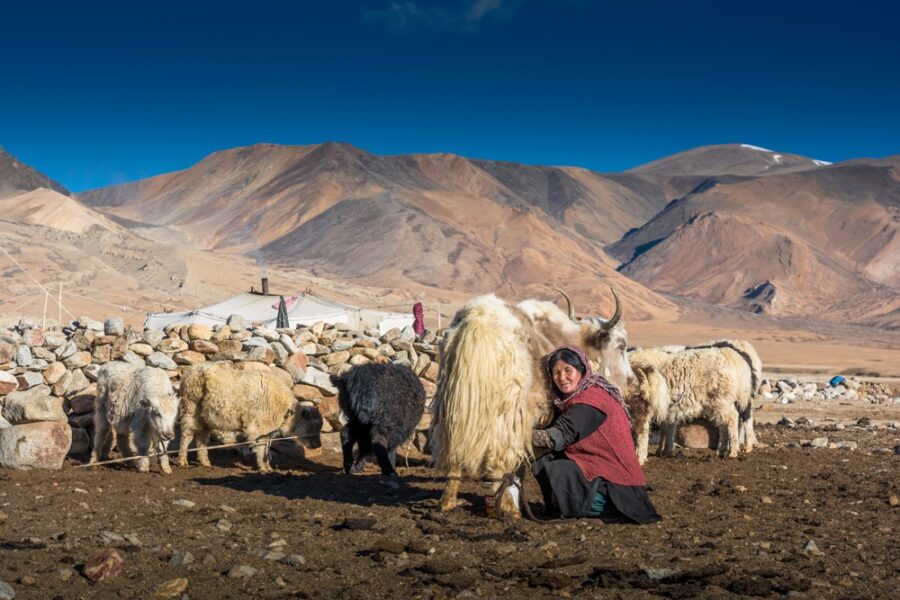
That responsibility is shared, in a different way, by the communities that inhabit these high-altitude regions. The people of Ladakh have lived with these mountains for generations. They understand the land, the weather and the rhythm of life at these altitudes in ways that cannot simply be learned from a map.
Their resilience is itself a reminder that the frontier is not merely a line defended by soldiers. It is also a living region inhabited by people whose lives and futures are closely connected to its security and prosperity.
There is, however, another reason why the Himalayas matter to Bharat that extends well beyond the immediate concerns of the frontier. These mountains are among the great lifelines of our civilisation.
The snowfields and glaciers of the Himalayas feed river systems that sustain agriculture, provide water to millions and support communities far beyond the mountains themselves. What appears from the air to be an immense and remote wilderness is, in reality, connected to the daily lives of millions of Indians.
The soldier guarding a high-altitude post is therefore conscious of more than the immediate tactical importance of his position. He is standing in a landscape that has a significance extending from the frontier to the heartland. This makes the responsibility of protecting the Himalayas even greater. Security, development and environmental responsibility cannot be separated completely in such a fragile region. We must strengthen our infrastructure and connectivity, support our frontier communities and maintain our preparedness, while ensuring that the mountains themselves are not treated as an inexhaustible resource.

Get Your Copy of Snow Leopards of Gurez: The Prisoner and the Spy Who Exposed Pakistan’s Kargil Plot
Now Available in : English & Hindi
The Himalayas have given Bharat much. They have given us rivers, forests, biodiversity and a formidable natural barrier. They have also given generations of soldiers a place where courage, discipline and endurance have been tested repeatedly. But perhaps their greatest lesson is one of perspective. Standing at these heights, the ordinary difficulties of life seem small. The mountains remind us that duty is larger than discomfort and that responsibility is sometimes measured not by what is convenient, but by what must be done. For a soldier, the cold is not an excuse. The altitude is not an excuse. The distance is not an excuse. If the nation needs you on a mountain, you go to the mountain. And you stay there.
Gazing Upon the Valleys of Ladakh
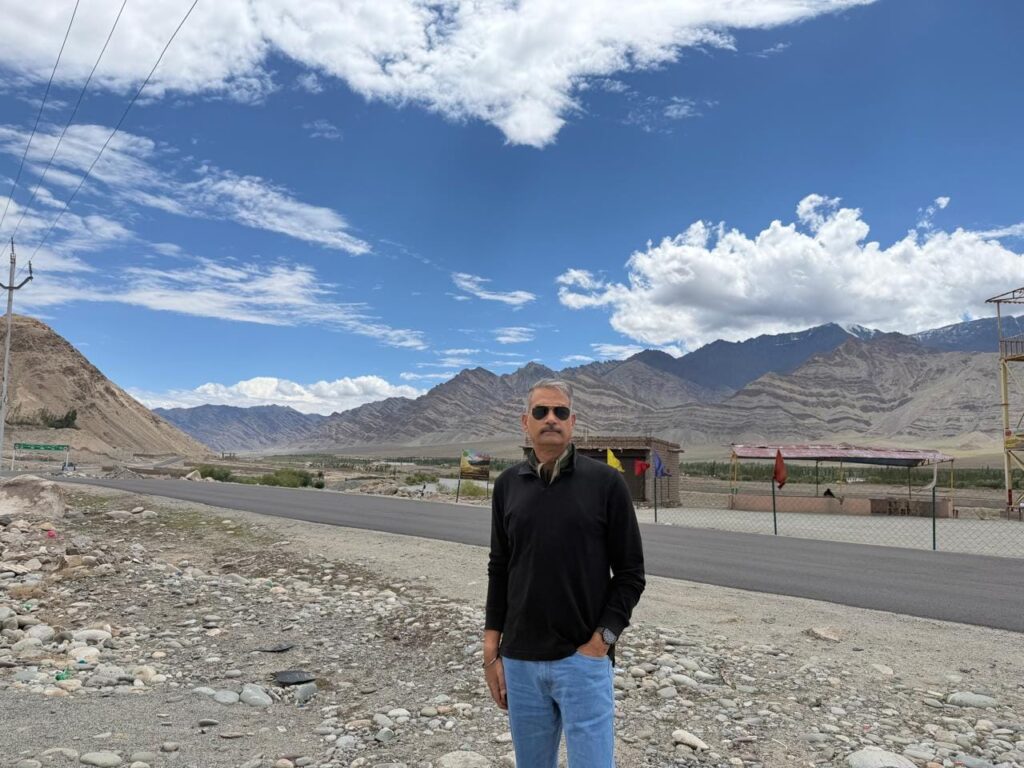
As I looked down upon Ladakh today, I found myself thinking of the many soldiers with whom I have shared these mountains their quiet professionalism, their humour in difficult circumstances, their ability to endure without complaint and, above all, their unwavering faith in the duty entrusted to them.
Many of them will never be known beyond their units and their families. But the nation rests, in part, on the quiet commitment of such men and women. That is the enduring strength of the Indian soldier. We do not claim to own the Himalayas. We are privileged to stand guard over a part of Bharat that has been entrusted to our generation. The mountains will remain long after our uniforms have been put away. Our task is simply to ensure that when the next generation looks towards these heights, it finds the Tricolour flying with the same pride, confidence and resolve.
Flying over Ladakh once again, I felt that familiar sense of humility before these giants. They have tested our soldiers. They have protected our civilisation. They continue to challenge us to be worthy of the land we have inherited. Perhaps that is why I call it an alliance.
The Himalayas do not seek our dominance. They demand our respect. And the Indian soldier, standing on their heights, gives that respect in the only way a soldier knows with courage, discipline and an unwavering commitment to Bharat.
— Lt Gen D.P. Pandey (Retd.)
Jai Hind Jai Bharat 🇮🇳
This piece was written during Lt Gen D.P. Pandey’s (Retd) visit to Ladakh for the Ladakh Book Festival 2026, where he spoke at the “Ranks & Reflections” session on 19 August at the NDS Memorial Sports Complex.