
Illusion of a Peaceful World in the Twenty-First Century
In Brief
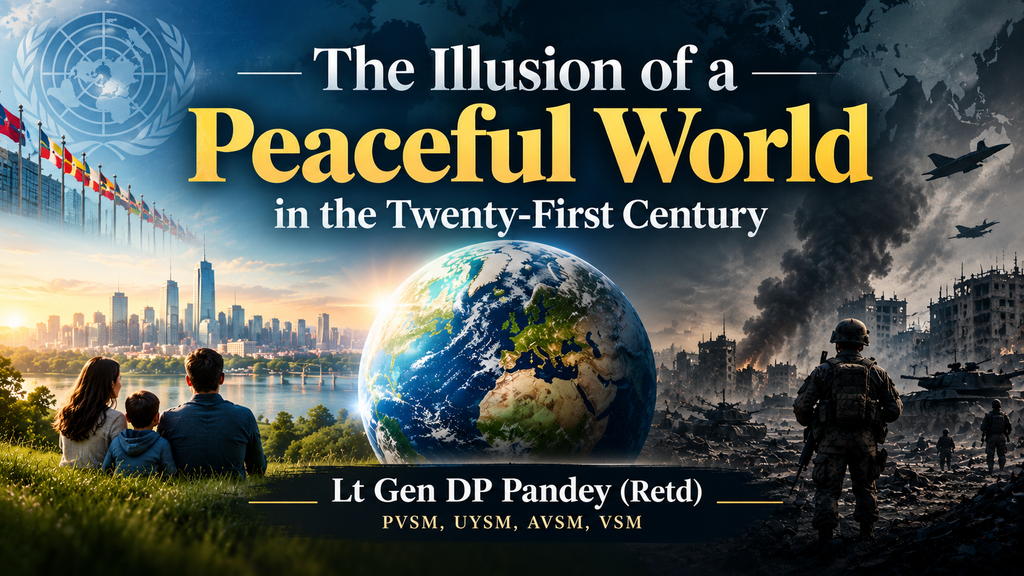
The twenty-first century began with the promise of peace, prosperity and global cooperation. The end of the Cold War, expanding international trade and rapid technological progress had created a widespread belief that economic interdependence would make major wars increasingly unlikely. Yet, more than a quarter of the century has passed, and the world remains embroiled in persistent conflict and strategic competition. The illusion of a peaceful world has given way to a more complex and contested international order.
During the last quarter of the twentieth century, the expansion of the internet, telecommunications, aviation and global shipping transformed the world into an interconnected economic system. Manufacturing hubs in China and other parts of Asia fuelled global growth, while the United States and Europe benefited from integrated supply chains and expanding markets. Several countries reduced their military capabilities, anticipating that economic interdependence would encourage cooperation rather than confrontation.
The ideas of Robert Keohane and Joseph Nye on complex interdependence helped explain this optimism. Their framework highlighted how economic ties, multiple channels of interaction and international institutions could constrain the use of force and encourage cooperation. The underlying assumption was that nations deeply connected through trade and shared economic interests would find conflict too costly. However, economic interdependence did not eliminate geopolitical rivalry; it also created new vulnerabilities that states could exploit.

Snow Leopards of Gurez: The Prisoner and the Spy Who Exposed Pakistan’s Kargil Plot
Months before the world knew “Kargil,” a captured Pakistani soldier’s confession in Gurez Valley exposed the truth behind the war and vindicated the brigade that dared to hold the peaks.
The terrorist attacks of 11 September 2001 exposed this contradiction dramatically. The attacks triggered prolonged wars and geopolitical confrontations, while demonstrating how global connectivity could be exploited by non-state actors. Subsequently, digital communications and social media became instruments for radicalisation, recruitment, propaganda and influence operations. The very technologies that facilitated prosperity also expanded the reach of those seeking to destabilise states and societies.
Competition has since expanded beyond conventional military confrontation. Technology has become a critical arena of strategic rivalry, encompassing artificial intelligence, semiconductors, cyber capabilities and space systems. Competition for energy, rare earth minerals, water and other strategic resources has intensified. Climate change, population pressures, forced displacement and economic migration have added to the challenges confronting governments. Extremist ideologies and information manipulation have further deepened societal divisions. In this interconnected environment, a regional conflict can disrupt global supply chains, energy markets and financial systems, producing consequences far beyond its geographical boundaries. Strategic competition is therefore persistent rather than episodic, extending across military, economic, technological, informational and societal domains.
This transformation also challenges the traditional understanding of victory. Military success may secure territory or destroy enemy capabilities, but it does not automatically deliver lasting political advantage. Prolonged conflicts can exhaust national resources, weaken economic resilience and damage the demographic vitality of a nation. The foremost objective of strategy must consequently extend beyond winning battles. Nations must integrate military power with economic strength, technological innovation, diplomatic influence and informational capabilities. Strategic restraint, institutional resilience and long-term planning are essential to preserving national interests.
The central lesson of the twenty-first century is that interdependence does not guarantee peace, just as military victory does not guarantee strategic success. The enduring purpose of strategy must be to preserve and enhance comprehensive national power in an increasingly contested world.
Author
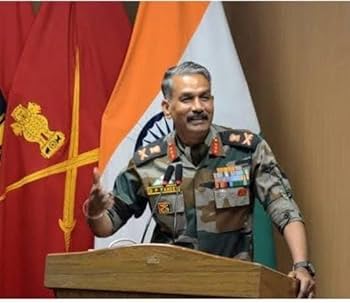
Lt Gen Devendra Pratap Pandey (Retd)
Former Corps Commander, Chinar Corps | DG Territorial Army | Director of Military Intelligence | Commandant, Army War College
You May Also Like to Watch
Copyright & Disclaimer
© All Rights Reserved 2026, Centre for Land Warfare Studies (CLAWS).
The original Issue Brief this piece references was published in September 2026. Views expressed are the author’s own, in his personal capacity. This content is shared on this website for educational and informational purposes, with full credit to CLAWS as the original publisher.