
Failing Pakistan’s Hybrid Model of Governance is a Threat to Regional Peace
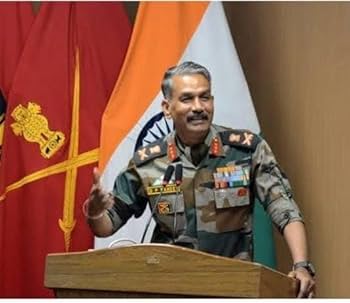
Lt Gen Devendra Pratap Pandey (Retd)
Former Corps Commander, Chinar Corps | DG Territorial Army | Director of Military Intelligence | Commandant, Army War College
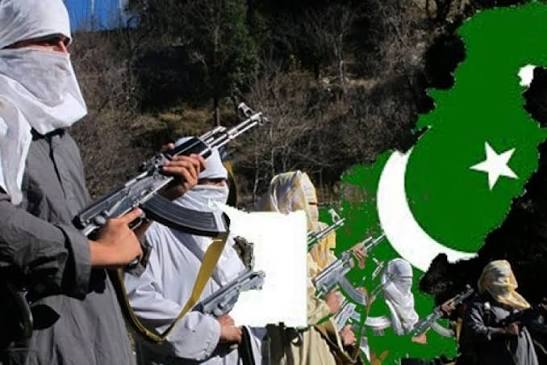
Pakistan is being destroyed by a multi-layered hybrid model of governance led by the Pakistan Army, controlled by external influences, polarised by religious radicals, and looted by corrupt elite politicians. This structure, far from being a temporary aberration, has become deeply entrenched over nearly eight decades, and it poses a serious threat not just to regional peace but to world security.
In this Issue Brief, Lt Gen Devendra Pratap Pandey (Retd.) argues that Pakistan’s crisis cannot be reduced to a simplistic narrative of military dominance alone. Instead, he identifies four interlocking layers of power the military establishment (the “Deep State”), the civilian political-feudal elite, religious-political and Islamist networks, and external patrons ranging from Britain and the United States to Gulf monarchies and China each competing, overlapping, and reinforcing one another to sustain a system built on instability rather than institutional strength.

Get Your Copy of Snow Leopards of Gurez: The Prisoner and the Spy Who Exposed Pakistan’s Kargil Plot
Tracing this trajectory from Pakistan’s very creation in 1947 through the military coups of Ayub Khan, Zia-ul-Haq, and Pervez Musharraf, to the current dual-hatted rule of Field Marshal Asim Munir, the brief argues that Pakistan’s geography among the most strategically valuable in the world has been squandered by leadership that consistently chose religious-ideological cohesion over durable institution-building. The paper examines how this hybrid model has produced a “conflict economy” that fuels terrorism, radicalisation, economic fragility, and internal fragmentation, particularly following Operation Sindoor, when the Pakistani state’s own leadership was compelled to publicly stand alongside internationally designated terrorist networks.
The brief concludes that while Pakistan remains a fragile hybrid security state rather than a failed one, its resilience should not be mistaken for stability and until it transforms from a rentier-security state into a genuine institutional democracy, it will continue generating instability for itself, the region, and the wider world.
You May Also Like to Watch
Copyright/Disclaimer:
No part of this publication may be reproduced, copied, archived, retained, or transmitted through print, speech, or electronic media without prior written approval from CLAWS. The views expressed and suggestions made in the article are solely those of the author in his personal capacity and do not carry any official endorsement. Responsibility for the contents lies purely with the author. This summary is shared on this website purely for educational and informational purposes, with full credit to CLAWS as the original publisher.