
War of Compulsions: Geopolitical Inflection Points in West Asia
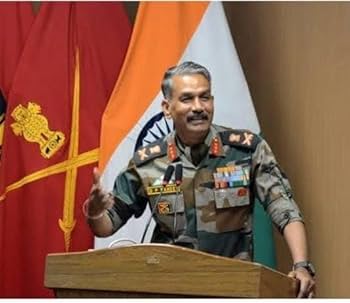
LT GEN DP PANDEY (R)
FOR THE CENTRE FOR LAND WARFARE STUDIES (CLAWS).
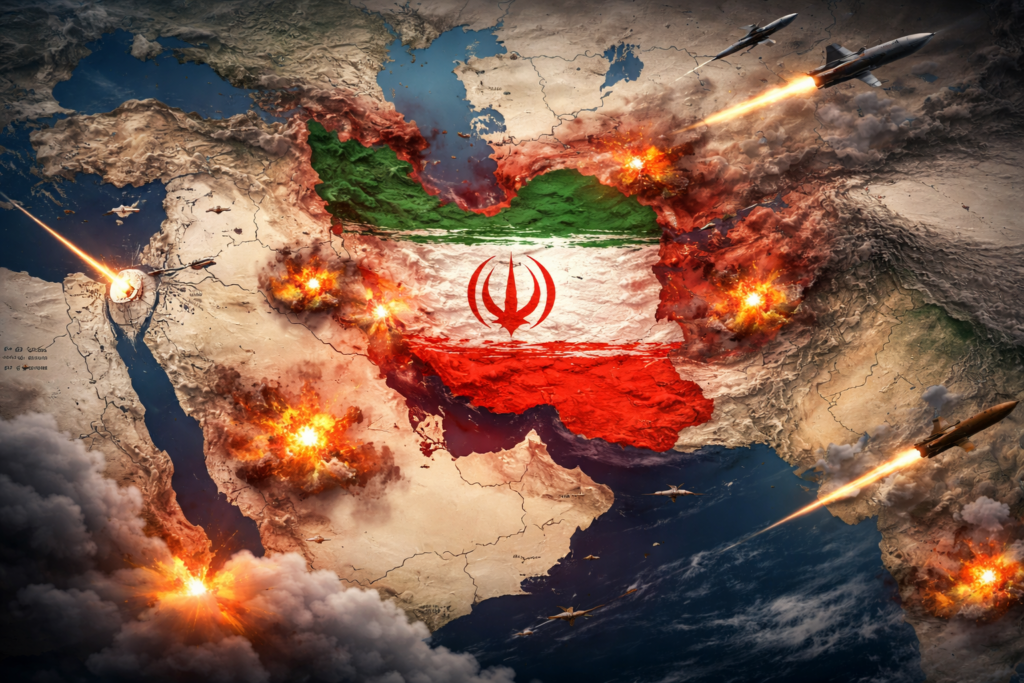
The ongoing conflict in West Asia is not a war of choice, but rather a clash of deep-seated structural compulsions. In this comprehensive analysis, originally published by the Centre for Land Warfare Studies (CLAWS) , Lt Gen Devendra Pratap Pandey (Retd) breaks down how the Iran-centered crisis is actually the intersection of two massive global and regional inflection points.
Rather than a localized crisis, the region has become a strategic arena where the declining supremacy of the United States and the aggressive rise of China collide alongside critical regional security dynamics.
Official Abstract
War in West Asia is not of choice but compulsions at various levels along overdue correction is being attempted by external and regional forces that had procrastinated on delayed actions. There are two ongoing major inflection points that, if continued uncontested, could alter the order that had existed for nearly a century in the world and half a century in the region. On the global stage, for the first time, US’ supremacy was being tested across the entire spectrum of elements of national power; the challenger here was China.
The conflict, initially restricted to Iran, has already become regional and is threatening to expand as others are being driven to either fulfil commitment of alliances and partnerships or the governments will be strained to take measures as the economy and the food security will be threatened. It will be years even after the war stops, for the world to recover from the spillover effects of the war and achieve economic stability. Hence, the Iran-centred conflict is representative of the global and regional systems under stress, wherein global rivalry and regional insecurity intersect reaching respective inflection points of “now or never”. Therefore, in this “war of compulsions” no actor can easily off-ramp without incurring unacceptable strategic costs.
Key Takeaways from the Issue Brief:
- The Global Inflection Point: The conflict serves as a proxy space in the US-China rivalry. With China relying heavily on Iranian energy resources (importing 90% of Iran’s oil and gas produce) , US interventions act as a strategic disruption to prevent its own superpower displacement.
- The Regional Inflection Point: Iran’s steady march toward the critical nuclear threshold and its massive ballistic missile stock have upended the traditional Shia-Sunni and Persian-Arab balance of power, forcing an unprecedented alignment of interests between Israel, Saudi Arabia, and the Gulf monarchies.
- The Economic Spillover: The disruption of critical trade choke points like the Strait of Hormuz directly threatens global energy stability, manufacturing supply chains (including next-generation technology and helium), and agricultural sectors due to the disruption of global urea/fertilizer supply lines.
Read the Full Issue Brief
Access the complete, official version of Lieutenant General Devendra Pratap Pandey’s analysis, “War of Compulsions,” originally published by the Centre for Land Warfare Studies (CLAWS).
Copyright: © All Rights Reserved 2026, Centre for Land Warfare Studies (CLAWS). No part of this publication may be reproduced, copied, archived, retained, or transmitted through print, speech, or electronic media without prior written approval from CLAWS.
Disclaimer: The views expressed and suggestions made in this article are solely those of the author in his personal capacity and do not represent any official endorsement by this website or any other agency. Attributability of the contents lies purely with the author.