
‘Failed Marshals’: Why Asim Munir’s Self-Appointment Degrades Pakistan’s Highest Military Office

LT GEN DP PANDEY (R)
Former Corps Commander, Chinar Corps | DG Territorial Army | Director of Military Intelligence | Commandant, Army War College
Lt Gen DP Pandey (Retd.) compares Asim Munir’s controversial Field Marshal appointment to Ayub Khan’s 1959 self-promotion and explains why Pakistan’s Army chief has earned the title “Failed Marshal” after Operation Sindoor.
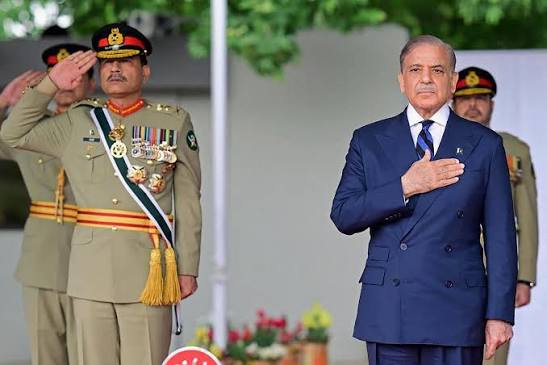
Pakistan holds a dubious distinction: it is the only nation to have produced two Field Marshals, despite a 78-year record marked by military defeats and eroded international standing. In his latest op-ed for News Analytics, Lt Gen D.P. Pandey (Retd.) draws a sharp, historically grounded comparison between the country’s two self-appointed Field Marshals Ayub Khan in 1959 and Asim Munir in 2025 to argue that both promotions were acts of political survival rather than military merit.
Ayub Khan seized the rank after engineering a military coup in 1958, using it to consolidate power as President. Six-and-a-half decades later, Asim Munir followed a similar script securing the honour through a compliant civilian government whose own survival depends on his continued patronage. The timing was especially striking: Munir’s elevation came weeks after the Pakistan Army suffered a humiliating setback in a brief military confrontation with India lasting under four days, earning him the moniker “Failed Marshal” across social and legacy media.
The piece traces the origins of that confrontation to a terror attack in Pahalgam, South Kashmir, on April 22, 2025, in which civilians were targeted on religious lines. India’s calibrated military response, Operation Sindoor, struck nine terror launchpads across Pakistan and PoK within fifteen days, going on to cripple Pakistani air defence networks and key airfields compelling Islamabad to once again seek American intervention, echoing the pattern set in 1965.
Lt Gen Pandey also draws out the contrasting personal trajectories of the two men Ayub Khan’s Sandhurst-trained, Western-facing worldview versus Asim Munir’s madrasah education and religiously charged rise through the ranks while highlighting the darker parallels that bind them: both were elevated through political expediency over merit, both leaned on Washington after military humiliation, and both used the rank of Field Marshal to mask failure rather than reward distinction.
The full analysis offers a compelling, historically layered perspective on how Pakistan’s civil-military equation continues to shape its conduct on the subcontinent and why, in the author’s assessment, the Field Marshal’s baton in Rawalpindi has become a symbol of survival, not soldiering.
Copyright & Disclaimer
This article was originally authored by Lt Gen D.P. Pandey (Retd.) and published by News Analytics. The summary above is presented on this website for informational purposes with due credit to the original publisher; readers are encouraged to visit the source link for the complete piece. All rights to the original content rest with News Analytics and the author. The views expressed in the original article are those of the author and do not necessarily reflect the views of News Analytics or of this website. Reproduction of the original article, in part or full, without permission from News Analytics is prohibited.