
Weaponising Social Media: How India Stands Exposed in the War for the Mind
Overview
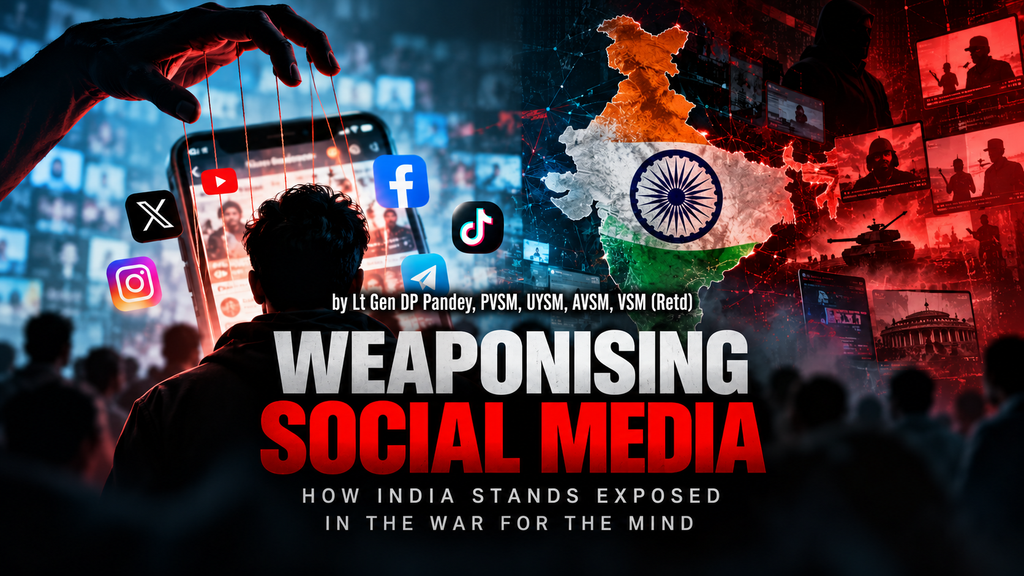
The next war may not begin with missiles, aircraft or artillery. It may begin with a message on a smartphone. In this Manekshaw Paper for CLAWS, Lt Gen Devendra Pratap Pandey (Retd.) argues that warfare is moving beyond land, sea, air, space and cyberspace into the human mind, a new battlespace he calls “Mind Space”. Perceptions, beliefs, emotions and decisions can now be shaped without firing a shot.
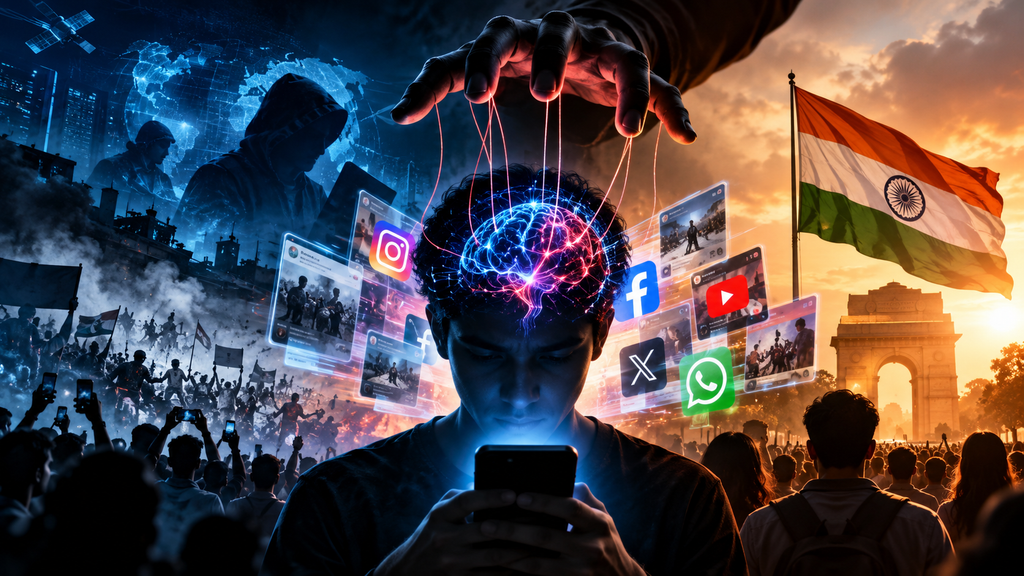
The paper first shows that information and psychological warfare are ancient. It draws on Sun Tzu, Genghis Khan, Chanakya’s Arthashastra and Britain’s cutting of Germany’s undersea cables in 1914. What has changed is the scale, speed and precision. Social media, artificial intelligence, algorithms, deepfakes and behavioural analytics can now carry a narrative to millions of people in seconds. It also sets out an eight-step “weaponisation cycle”, from identifying an audience and a grievance to converting perception into behaviour. It illustrates the cycle with the Nepal Gen-Z protests of September 2025.
The paper then turns to India. It argues that India is an open, digitally connected democracy of 1.4 billion people, more than 65% of them under 35. It operates in an information environment dominated by platforms it does not control. It identifies five kinds of actors who can weaponise social media: states, terrorist organisations, political parties, commercial platforms and individual influencers. It points to recent episodes where India struggled to win the contest of narratives, including the anti-CAA protests and the narrative battle after Operation Sindoor.
The paper’s answer is not to control information. A democracy cannot and should not do that. It proposes a seven-part national response, built around a National Cognitive Security Architecture that brings together existing defence, intelligence, cyber, technology and communication capabilities. It also calls for narrative preparedness before a crisis and indigenous technological capability. The paper concludes that India must strengthen the citizen’s mind rather than control it, and build trust, resilience and institutional agility. The battle for the mind has already begun, and the question it leaves is whether India is prepared to fight it.
Author
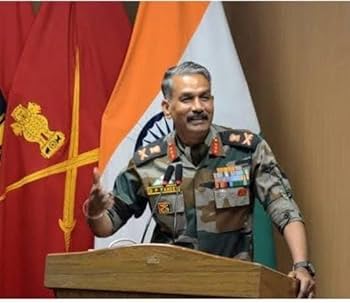
Lt Gen Devendra Pratap Pandey (Retd)
Former Corps Commander, Chinar Corps | DG Territorial Army | Director of Military Intelligence | Commandant, Army War College
Read the Full Paper


You May Also Like to Watch
Copyright & Disclaimer
© All Rights Reserved 2026, Centre for Land Warfare Studies (CLAWS).
The original paper this piece references, Manekshaw Paper No. 147, was published by CLAWS in October 2026. Views expressed are the author’s own, in his personal capacity. This overview is shared on this website for educational and informational purposes, with full credit to CLAWS as the original publisher.
Keywords
Cognitive warfare, Mind Space, social media weaponisation, information warfare, psychological warfare, perception management, artificial intelligence, deepfakes, algorithms, narrative warfare, India national security, cognitive security architecture, digital sovereignty, Operation Sindoor narrative, Nepal Gen-Z protests, multi-domain warfare, Manekshaw Paper.