
Restraint as a Successful Strategy in the 1999 Kargil Conflict
The article was written in 2008 in National War College, Washington DC, USA by Colonel DP Pandey, now retired as Lieutenant General.
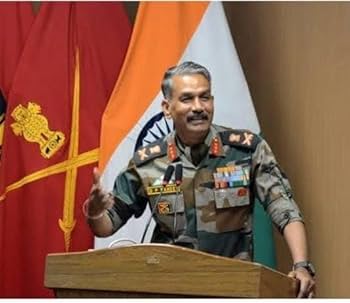
LT GEN DP PANDEY (R)
Former Corps Commander, Chinar Corps | DG Territorial Army | Director of Military Intelligence | Commandant, Army War College
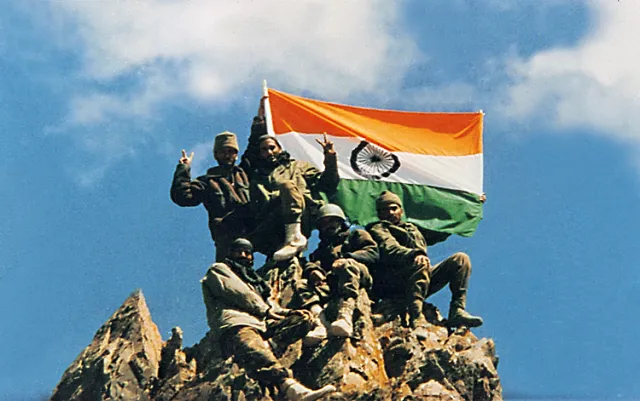
As India marks another Kargil Vijay Diwas this July, it’s worth revisiting one of the sharpest strategic assessments ever written on the conflict this 2008 essay by Lt Gen D.P. Pandey (Retd.), published in the Small Wars Journal. In it, he argues that India’s greatest victory in Kargil was not merely tactical, but strategic: the deliberate choice of restraint.
Drawing on his own experience as an Indian Army infantry officer, Lt Gen Pandey walks readers through the geopolitical backdrop of 1998–99 the post-nuclear-test isolation of India and Pakistan, General Pervez Musharraf’s rise as Pakistan’s Army Chief, and the meticulous, decade-long planning behind Operation Badr. He then examines how a fragile Indian caretaker government, under intense domestic pressure for all-out war, instead adopted a calibrated “contain–evict–deny” strategy confining operations to the area of intrusion and refusing to cross the Line of Control.
The essay makes a compelling case that this restraint was not weakness but strength: it denied Pakistan the international escalation it sought, exposed Islamabad’s false claims of a “mujahideen-only” operation, and won India a decisive diplomatic and moral victory even as its soldiers fought one of the most difficult infantry campaigns in modern military history scaling 18,000-foot peaks under direct enemy fire. Lt Gen Pandey closes with lessons that remain strikingly relevant today: that restraint is a tool of the powerful, not the weak; that national leadership must resist short-term populist pressure in favor of long-term strategic objectives; and that in an interconnected, globalized world, the fallout of any conflict rarely stays contained to the battlefield a reflection that speaks directly to contemporary crisis decision-making, strategic patience, and India’s evolving doctrine on limited war and national security.
Do watch this podcast as well for a related conversation on the subject
This summary is provided for informational purposes to introduce readers to the original work. The full essay, “Restraint as a Successful Strategy in the 1999 Kargil Conflict,” was written in 2008 in National War College, Washington DC, USA by Colonel DP Pandey, now retired as Lieutenant General. The essay was first published by Small Wars Journal LLC on June 15, 2008. © 2008 Small Wars Journal LLC. The original work is licensed under a Creative Commons Attribution NonCommercial ShareAlike 3.0 License. Views expressed in the original essay are the author’s own, based on his professional assessment at the time of writing, and are shared here for historical and educational reference.