
Beyond the Battlefield: Synchronising National Power for India’s Future Security
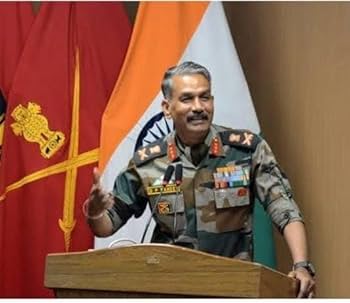
Lt Gen Devendra Pratap Pandey (Retd)
Former Corps Commander, Chinar Corps | DG Territorial Army | Director of Military Intelligence | Commandant, Army War College

In Brief
The modern battlespace extends far beyond physical geography. It now encompasses cyberspace, financial networks, information ecosystems, technological competition, public perception and cognitive influence. The distinction between peace and conflict is increasingly blurred. Nations compete continuously, often below the threshold of war, employing every instrument available to advance their interests.
This is no longer a peripheral shift it is the defining feature of contemporary strategic competition. A cyberattack on critical infrastructure, a coordinated disinformation campaign, or a calculated financial squeeze can achieve outcomes once reserved for armed conflict, and often with greater precision and deniability. Adversaries no longer wait for a declaration of war to advance their objectives; they act continuously, testing thresholds, probing vulnerabilities, and shaping narratives long before, and long after, any shots are fired.
India’s future security will therefore depend not merely on the strength of its armed forces, but on its ability to synchronise all elements of national power into coherent strategic outcomes.
This demands institutional coordination that goes well beyond traditional military planning. Diplomacy, economic policy, technological development, information strategy, and defence capability must operate not as separate silos but as an integrated whole, each reinforcing the other toward a common national objective. A nation that masters this synchronisation gains strategic depth that no single instrument of power, however formidable, can provide alone.
Another important lesson that emerges from these writings is the need for strategic flexibility. The world ahead is likely to become even more volatile, uncertain, complex and ambiguous. Long-term objectives will remain essential, but rigid plans may quickly become obsolete. Leaders will need to anticipate disruption, adapt to unforeseen developments and remain resilient in the face of strategic shocks. Events occurring in distant regions may suddenly alter domestic priorities. Emerging technologies may overturn established doctrines. Adversaries may exploit vulnerabilities that traditional strategic frameworks fail to recognise.
Strategic rigidity, in this environment, is not caution it is exposure. Institutions built for a slower, more predictable world will find themselves outpaced by actors willing to move faster, think laterally, and exploit the gaps between fixed doctrines. Resilience must therefore be built into the system itself, not treated as a contingency to be activated only after disruption has already occurred.
The future will reward those who can anticipate change rather than merely react to it.

Get Your Copy of Snow Leopards of Gurez: The Prisoner and the Spy Who Exposed Pakistan’s Kargil Plot
You May Also Like to Watch
Copyright/Disclaimer:
This article is authored by Lt Gen Devendra Pratap Pandey, PVSM, UYSM, AVSM, VSM (Retd.). Views expressed are personal and reflect the author’s own strategic assessment. This content is original to this website and may not be reproduced, copied, or republished without prior written permission of the author.
Keywords
National power synchronisation, hybrid warfare, cyberspace security, cognitive warfare, grey zone conflict, strategic flexibility, VUCA world, India national security strategy, emerging technology disruption, strategic anticipation, comprehensive national power, information warfare, future of conflict.